Traditional Motifs & Patterns in Mehandi Art
Classic peacock motifs, lotus designs, and detailed jaali patterns that bring timeless elegance to your celebrations.
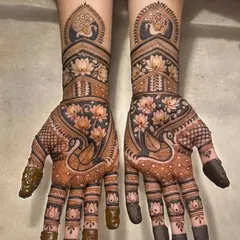
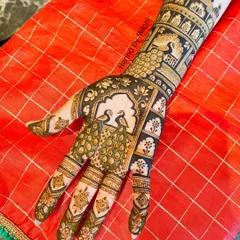
A stunning design with a large peacock as the centerpiece on the back of the hand. The fingers are decorated with delicate lotus motifs.
A full-arm design featuring a large, detailed peacock. The feathers of the peacock form the main pattern on the arm.
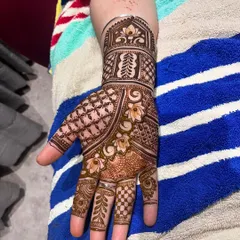
A beautiful full-hand design with a traditional jaali or checkered pattern. This style is very popular for brides and festivals.
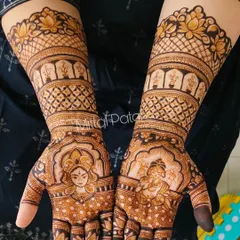
A dense, full-hand design with a mix of floral, paisley, and peacock motifs. This is a classic example of traditional Indian mehandi.
A sketch of a beautiful floral and geometric pattern. The central flower is surrounded by intricate net and spiral designs.
A collage of two different traditional designs. One is a dense floral pattern, and the other is a geometric jaali design.
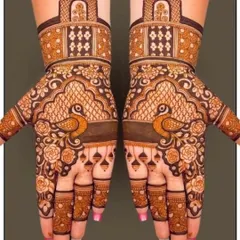
A beautiful design featuring two peacocks inside an ornate arch. The fingers are decorated with matching patterns.
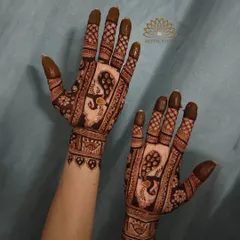
A pair of hands showing two different traditional designs, one with a peacock and the other with a dense floral pattern.
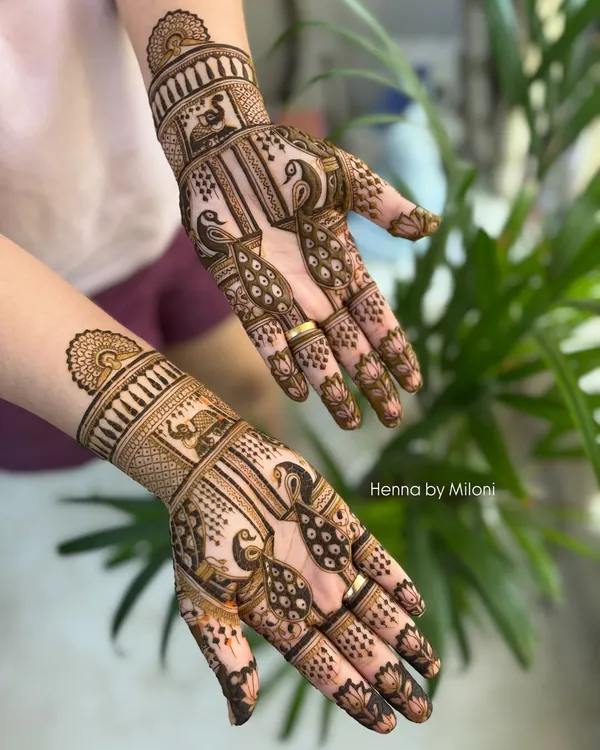
A design with a peacock as the central motif, surrounded by delicate patterns. The wristband features a lotus design.
A client showing off her beautiful jaali pattern mehandi on the back of her hands.
About Traditional Motifs & Patterns
When I create traditional patterns, I focus heavily on the spacing between the jaali checks and the curves of the peacocks to ensure the henna stains a deep, rich brown. My technique involves building the design from the center outwards to maintain symmetry. For the best color payoff, try to keep the mehandi on your skin for at least six hours and avoid direct contact with water immediately after application.
There is something truly special about the classic Indian mehandi. While trends change, the traditional motifs like peacocks, lotus flowers, and intricate geometric jaali (net) patterns remain the heart of any celebration. These designs require a steady hand and patience, which is exactly where my 'mehnat' goes.
My approach to these designs is to balance density with flow. A good traditional full-hand design should not look cluttered. I carefully layer paisleys and floral vines so that the final result looks full but defined. Whether you are prepping for a festival like Karva Chauth or looking for a traditional look for a wedding, these patterns are timeless.
Why Choose Traditional?
- Timeless Appeal: Unlike modern fusion styles, traditional motifs never go out of fashion.
- Symbolic Meaning: Motifs like the peacock often represent grace, while the lotus symbolizes purity. It adds depth to your mehandi.
- Versatility: These patterns work just as well for festivals as they do for bridesmaids or guests at a wedding.
I treat every hand as a canvas, focusing on the dark stain that comes with good quality natural henna. When you book a traditional full-hand design with me, we will spend about 30 to 45 minutes ensuring that every line is clean and every motif is placed to suit your hand structure. It is not just about the final look, it is about the sukoon of the process.
Similar work from other experts
Browse through Curated picks from other experts on mytribe
Traditional Indian Mehndi Designs
Traditional Indian Mehndi Motifs
 10
10
Traditional Mehndi Motifs and Patterns in Mumbai
 52
52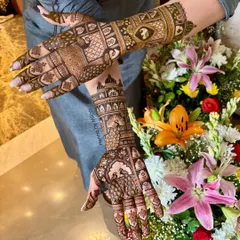
Timeless Traditional Mehendi Designs
Traditional Indian Mehndi Designs
Traditional Indian and Floral Mehndi Designs
More from Festival & Occasion Mehandi by Beena Mehandi Art
More services by Beena Mehandi Art