Practical Life Skills Through Kitchen Adventures
Seeing a three-year-old independently slice a mango isn't just a fun moment, it is a milestone. Our kitchen activities build confidence, focus, and fine motor skills through real, purposeful work.
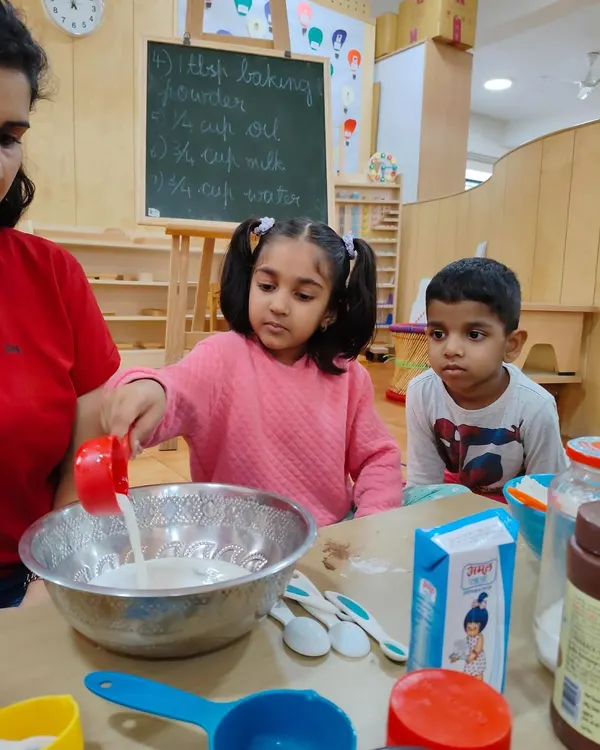
We're all set for our mango cheesecake activity. I guide the children as they get ready to explore ingredients and learn through this exciting fireless cooking project.
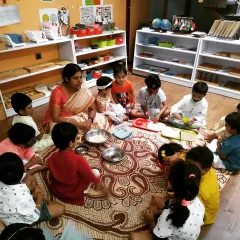
A group photo before we begin our mango cheesecake adventure. These kitchen activities are a wonderful way to learn about teamwork and following a process.
A child carefully slices a mango with a kid-safe knife. This practical life exercise hones fine motor skills, concentration, and gives a great sense of accomplishment.
This young chef is focused on slicing mangoes for our group activity. Each child gets to participate in the process, from preparation to the final delicious result.
With great focus, a child practices her knife skills on a juicy mango. These activities are designed to build confidence and independence in the kitchen.
A young student carefully cuts a mango, learning about food preparation. Our Montessori approach emphasizes real, purposeful work for children.
A child practices slicing mangoes on a cutting board. This hands-on activity is a favorite, teaching both kitchen skills and patience.
Another student masters the art of slicing mangoes. We provide the tools and guidance for children to safely explore practical life skills.
A child learns to peel a mango using a child-safe peeler. This activity is excellent for developing hand-eye coordination and fine motor control.
Focused on the task of peeling a mango, this child is engaged in a practical life lesson. We encourage independence and self-reliance in our students.
About Practical Life Skills: Kitchen Adventures
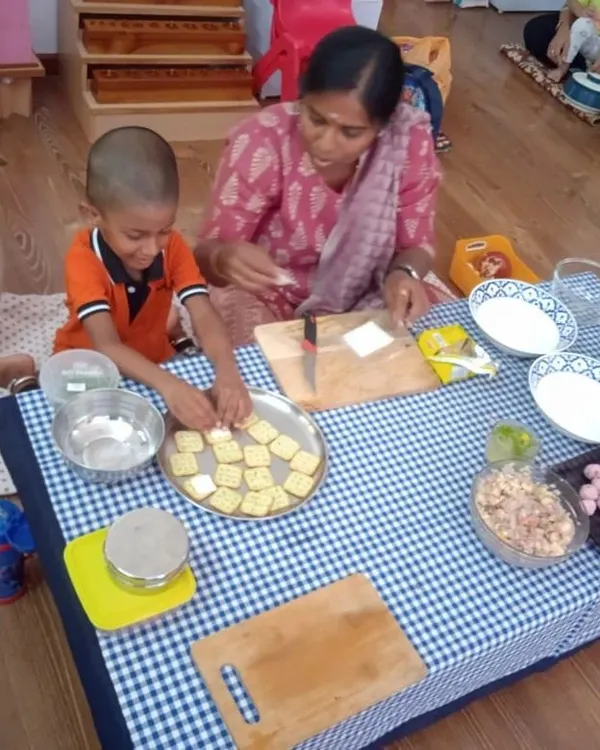
We treat our classroom kitchen as a laboratory for life, not just a place for snacks. When children peel, slice, and mix ingredients using child-safe tools, they are not just making a lassi or salad. They are refining their hand-eye coordination, learning to sequence steps, and taking responsibility for their own nutrition. This is focused, quiet work that builds the essential physical foundation for writing and complex academic tasks later on.
Building Independence
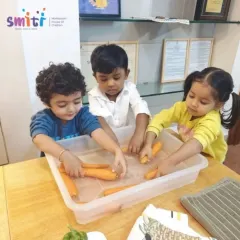
In the Montessori method, these are called 'Practical Life' exercises. They are not chores, but purposeful activities that calm the mind and strengthen the hands. When a child carefully shells peas or slices soft fruit, they develop the pincer grasp—the same muscle control required for holding a pencil.
Why We Use Real Tools
We use real, child-safe kitchen tools rather than plastic toys because children thrive when they are trusted with the real deal. When a student successfully prepares a snack, the boost in self-esteem is tangible. They feel capable, independent, and like an active contributor to our school community.
Connecting to Culture
We often tie our kitchen adventures to Indian festivals and seasons, making healthy eating a cultural exploration. Whether it is preparing mangoes during summer or learning to make a festive snack, the kitchen is where our children connect to their roots. This program is an integral part of our daily routine for toddlers and preschoolers in Banaswadi, turning simple ingredients into a lesson about patience, preparation, and shared joy.
Similar work from other experts
Browse through Curated picks from other experts on mytribe
Practical Life Skills: Montessori Fireless Cooking Activities
 27
27
Hands-on Cookery and Practical Life Skills
Practical Life Skills: Montessori Learning in Action
 17
17
No-Fire Cooking: Practical Life Skills for Kids
 9
9
Practical Life Skills Activities for Kids
 37
37
Building Independence Through Montessori Practical Life Skills
More from Montessori Preschool Program by Tiny Mustards
More services by Tiny Mustards