Hair Transplant Questions Answered by an Expert
So friends, there is a lot of noise in the market regarding hair transplants. I am here to clear the air with honest, science-backed answers to your most common concerns so you can make an informed choice.
Many patients worry about hair transplant failure. In this video, I explain the key factors for success, including the surgeon's qualifications, the team's experience, and the quality of the instruments used.
A patient once asked, "Why should I choose your clinic?" Here, I explain the importance of evaluating a surgeon's experience, their role in the surgery, and their history with complex corrective cases.
Is a hair transplant possible if the donor area has thin hair? I discuss this important question, explaining how I evaluate the donor area to determine if a patient is a suitable candidate.
Can you go swimming after a hair transplant? I explain that after the initial healing period of about 15-30 days, it is completely safe to swim as the new hair roots are secure.
Here I am marking the hairline for a complex case requiring 9000 grafts for Grade 7 baldness. I explain my strategy, which involves using hair from the scalp, beard, and chest to achieve full coverage.
This video provides a quick overview of the benefits of PRP (Platelet-Rich Plasma) therapy, which stimulates natural hair growth and is a safe, non-surgical option for hair rejuvenation.
This video explains the benefits of GFC (Growth Factor Concentrate) hair treatment. It is a safe, painless, and effective non-surgical option to improve hair regrowth with natural-looking results.
About My Expert Insights: Your Questions Answered
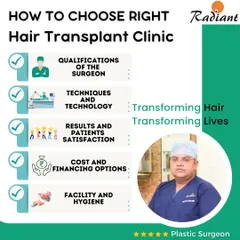
Choosing the right clinic starts with one question: how involved is the surgeon in your procedure? Don't just look for a low price. I personally manage the hairline design and graft planning for every patient, because a successful transplant depends on high-quality micro-punches and an experienced team, not just the total number of grafts.
Understanding Your Hair Transplant Journey
Many patients come to me worried about the same things: Will the transplant fail? Is my donor area too thin? Can I go back to my routine after surgery? These are valid questions, and the answer is rarely a simple 'yes' or 'no.' It depends on your unique pattern.
Why Transplants Fail
I see many cases of failed hair transplants where the root cause is either poor technique or an undertrained team. Success isn't just about moving hair; it is about respecting your donor area's limits. For instance, in Grade 7 baldness cases, I have performed procedures involving up to 9000 grafts, but this requires harvesting from the scalp, beard, and chest. If a clinic isn't transparent about where your grafts are coming from, you should be concerned.
Can You Fix Thin Donor Hair?
If you have been told your donor area is too thin, don't lose hope. I evaluate each case to see if the thinning is genetic or a recent change. If we proceed, I use specialized techniques like Boosted FUE to ensure we get the best possible coverage with the hair you have. We don't use magic; we use science.
Recovery and Routine
Recovery is a slow process, not a sprint. Patients often ask me if they can swim or exercise after a transplant. Once the initial healing period of 15 to 30 days is over, you can return to activities like swimming, as the hair roots are secure deep within the skin. If you are struggling with post-op shedding, I often recommend PRP or GFC treatments to stimulate natural growth and strengthen existing follicles.
My door is always open for a proper consultation. Let's look at your hair, understand the root cause, and build a plan that works for you.
Similar work from other experts
Browse through Curated picks from other experts on mytribe
Expert Answers to Your Hair Transplant Questions
Expert Answers to Your Hair Transplant Questions
Common Hair Transplant Questions Answered
Hair Transplant Truths: Expert Answers to Your Doubts
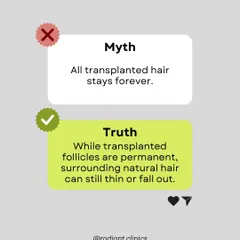
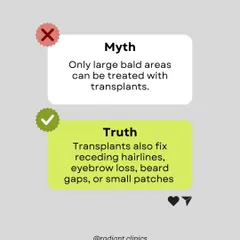
Hair Transplant Myths vs Facts: An Expert Guide
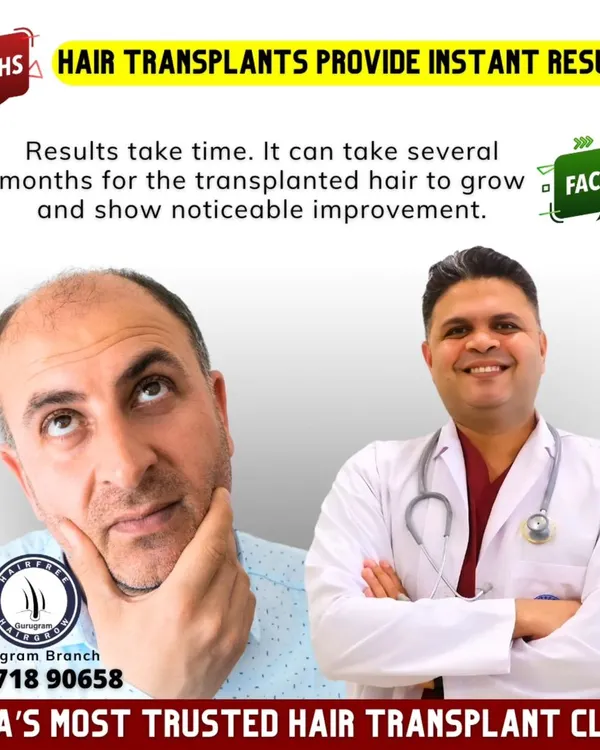 10
10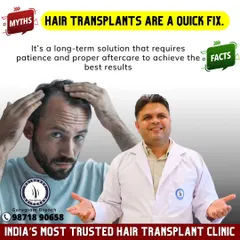
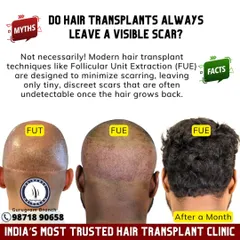
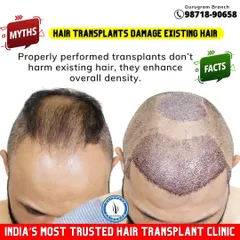
Hair Transplant Myths vs. Facts
More from Hair Transplant & Restoration by Gaurav Garg
More services by Gaurav Garg