TARA Kotagiri: Rearchitecting a Boutique Resort in the Nilgiris
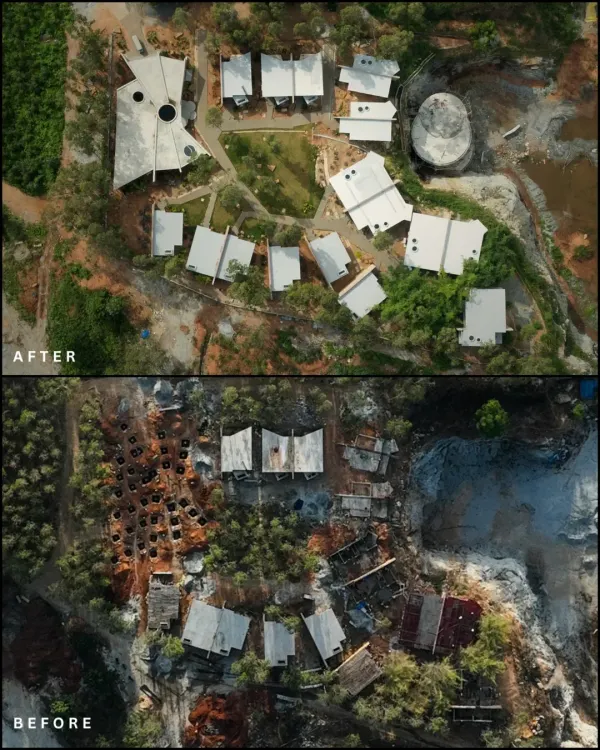
We transformed a dilapidated facility into a private retreat by honoring the Nilgiri landscape and reshaping the existing structure.
This video shows the dramatic transformation of the TARA resort. From the original bright red buildings, we created a structure that uses natural color palettes and materials like stone and wood to blend seamlessly with the mountain environment.
A collage showing the project in progress. You can see the original structure being enveloped by the new design, the introduction of terracotta roof tiles, and the circular window detail that frames the Nilgiri hills, illustrating our process of adaptive reuse.
Here, we are adding a new floor to the existing structure. The outwardly protruding columns on the ground floor are being camouflaged with recessed half-cut bricks, a technique we used to create a 'Brick Frame' that adds texture and visual rhythm to the facade.
A close-up of the recessed brickwork detail. This level of craftsmanship is central to our work, turning a simple structural element into a decorative feature that plays with light and shadow.
We explored using wooden textured concrete for some of the walls. This technique allows us to achieve the raw, organic texture of wood with the durability of concrete, adding another layer to the material palette of the resort.
The resort during the final stages of landscaping. The curving stone and brick retaining walls are designed to follow the natural contours of the land, creating terraced gardens that will soon be filled with local flora.
A finished view of one of the private suites, featuring a curved cantilevered balcony. This element provides a private outdoor space for guests while creating a dynamic architectural form against the rugged stone retaining walls.
The resort pathways at night. The lighting design is subtle, illuminating the stone walkways and steps to ensure safe navigation while maintaining a tranquil, low-light ambiance that respects the nocturnal environment.
A video showcasing the resort's atmosphere after dark. The warm light on the wooden deck, the custom-made natural fiber light fixtures, and the illuminated pathways all contribute to a feeling of quiet elegance and serenity.
The resort enveloped in the morning mist of the Nilgiris. We designed the buildings to interact with the changing weather, making the fog and rain as much a part of the experience as the sunshine.
About TARA Kotagiri: A Resort Reimagined
To integrate the new floor with the original structure at TARA, we moved away from standard cosmetic finishes. We used recessed half-cut bricks to create a 'Brick Frame' around the ground floor columns. This technique doesn't just camouflage the heavy structural elements; it adds a tactile, rhythmic texture to the facade that shifts with the play of light and shadow across the mountainside.
Our approach to TARA was an exercise in rearchitecture—the intentional act of reshaping an existing, weary form rather than dismantling it. When we first surveyed the site, we saw a dilapidated structure that needed to communicate with the Nilgiri terrain, not sit passively on top of it.
We prioritized sustainability through local intervention. We sourced mud from the site itself for the plaster, ensuring the walls carry the literal color and composition of the land. The roof was reconstructed using treated timber and terracotta tiles, providing thermal insulation that remains effective in the cool mountain climate. We also replaced standard walls with clay jali blocks and large glazing, allowing the indoor environment to open up to the mist and greenery of the valley.
Every decision was guided by the need to balance privacy with openness. The curved stone retaining walls and terraced landscaping were engineered to follow the natural contours of the hill, creating individual private zones for guests. By mixing reclaimed railway wood for joinery with modern structural steel, we balanced a rustic aesthetic with the durability required for a high-traffic resort environment. This project serves as a case study for how we approach boutique resort design—balancing local environmental context, structural integrity, and the sensory experience of the resident.
Similar work from other experts
Browse through Curated picks from other experts on mytribe
 21
21
Sustainable Eco-Lodge & Hospitality Architecture
 20
20
Luxury Farmhouse and Resort Architecture
 12
12
Resort Architecture and Retreat Design
 7
7
Hospitality & Nature Retreats Design
 26
26
Sustainable & Site-Responsive Resort Architecture
 40
40
Raghunath Farmhouse Design in Kotagiri
More from Renovation & Adaptive Reuse by Senscape
More services by Senscape