Architectural & Symmetrical Mehendi Design Portfolio
Symmetry and structure are the pillars of professional bridal mehendi. Explore these balanced patterns, featuring intricate palace domes, arches, and traditional motifs designed for visual harmony.
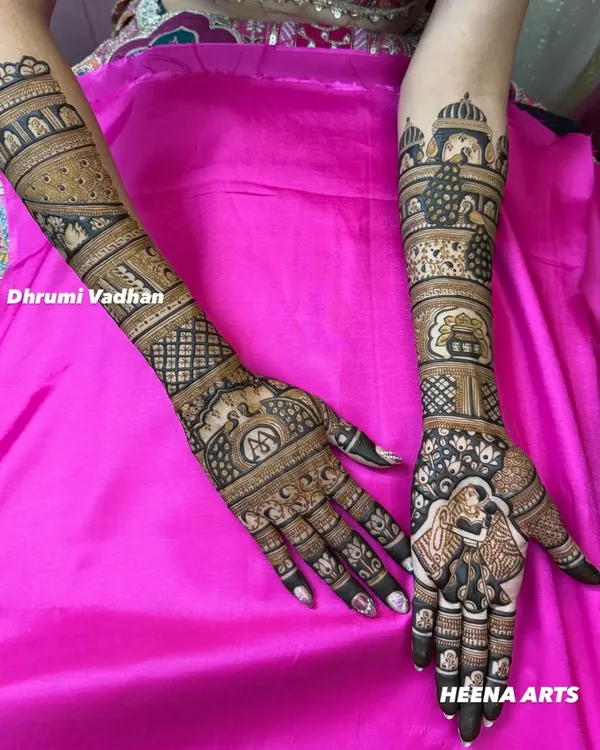
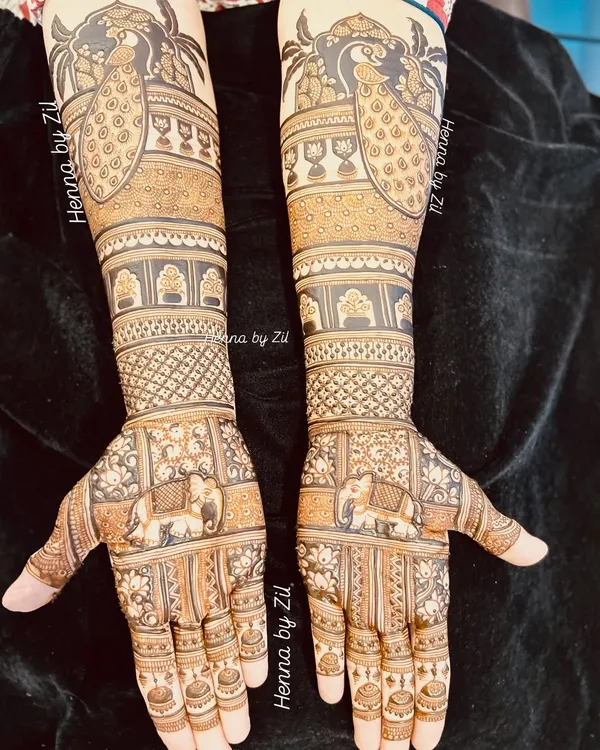
This video showcases a detailed forearm design featuring jharokha style windows, peacocks, and elephants. I teach the techniques for creating these traditional Rajasthani motifs with clean, confident lines.
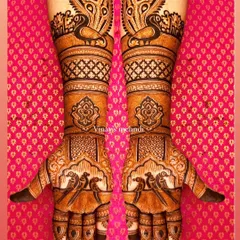
A clear example of a symmetrical forearm design. My classes emphasize achieving perfect balance and mirroring patterns, which is a crucial skill for professional bridal work.
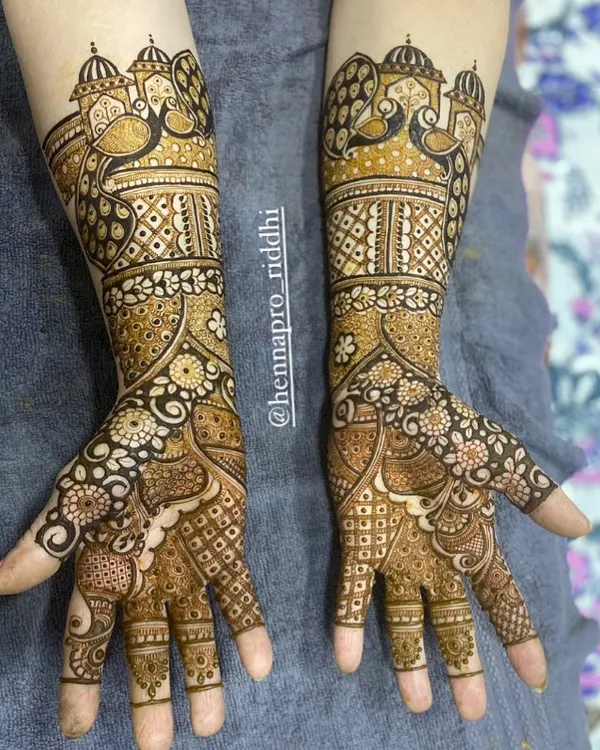
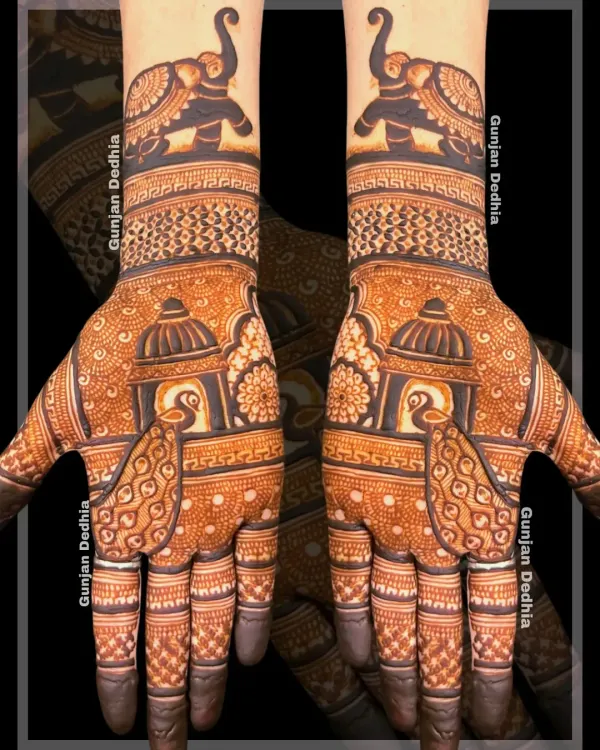
This design features a prominent peacock motif set against a backdrop of palace domes. You will learn how to draw majestic birds and architectural elements, key components of royal bridal mehendi.
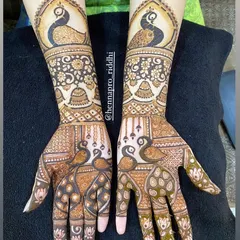
A close up of a large, stylized peacock figure. We practice drawing various forms of popular motifs like peacocks and lotuses, focusing on flow and detail.
This pattern combines the lotus motif with a geometric 'jaal' or net pattern. I teach how to create these intricate nets and use shading to give them depth and a three dimensional feel.
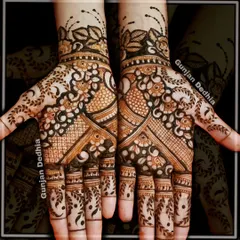
Using dark, filled areas, known as negative space, makes the lighter details pop. This symmetrical design is a great example of the technique, which we cover in depth in the advanced course.
The architectural domes and repeating lotus patterns on these feet show how to adapt complex themes for different parts of the body. We practice creating designs that are both intricate and comfortable for the client.
About Architectural & Symmetrical Patterns
Perfect symmetry on a curved forearm is not just about steady hands, it is about grid planning. I start every design by mapping out the central points, ensuring the palace arches and peacock motifs mirror each other exactly, creating a balanced, royal look that spans from elbow to fingertip.
Architectural mehendi requires more than just artistic flair; it demands a clear understanding of geometry and spacing. When I work on these symmetrical designs, I treat the skin like a canvas, carefully measuring out the space for large elements like palace domes and elephants before I begin the intricate filling work.
These designs often feature a Jali (net) pattern, which is the most challenging part of the process. If your lines are not spaced perfectly, the symmetry breaks. I teach my students to build these grids from the wrist upwards, creating a consistent base that holds the weight of the heavier motifs above it. This structure is what makes the design look clean and sophisticated in photographs.
My approach to architectural motifs—like the jharokha windows or arched gateways—is to use negative space strategically. By alternating between dark-filled areas and fine-line work, I create the illusion of depth and 3D architectural form. This is particularly popular for brides who want a heavy, traditional look that still feels modern and sharp. Whether it is a peacock perched on a dome or a delicate lotus vine bordering the pattern, every line is intentional to ensure the design remains balanced and elegant.
Similar work from other experts
Browse through Curated picks from other experts on mytribe
 42
42
Classic Indian Mehendi Artistry in Mumbai
Traditional Mehndi Motifs: Learn Intricate Patterns in Mumbai
 6
6
Intricate & Traditional Mehendi Artistry
 92
92
Intricate Traditional Bridal Mehendi Designs
Intricate Traditional Mehendi Designs
 30
30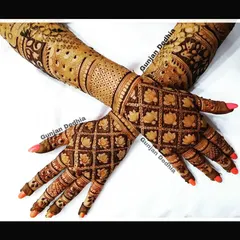
Traditional & Intricate Mehendi Designs
More from Mehendi Art Courses by Shravani Chavan
More services by Shravani Chavan