Yoga with Props: Find Alignment and Stability
Props are not crutches; they are bridges to better alignment. Whether you are stiff or flexible, learn how I use blocks, straps, and wheels to make your yoga practice safer and more effective in Gurgaon.
Using a yoga wheel in Urdhva Dhanurasana (Wheel Pose) can help deepen the backbend while providing support. It's a great way to flow into the weekend with intention, not exhaustion.
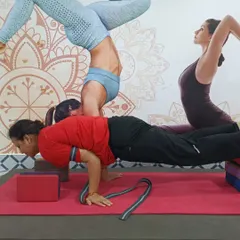
Here, the yoga wheel supports a variation of Sarvangasana (Shoulder Stand), demonstrating 'Dharna' or focused concentration. The prop helps in holding the pose with stability, allowing the mind to find presence.
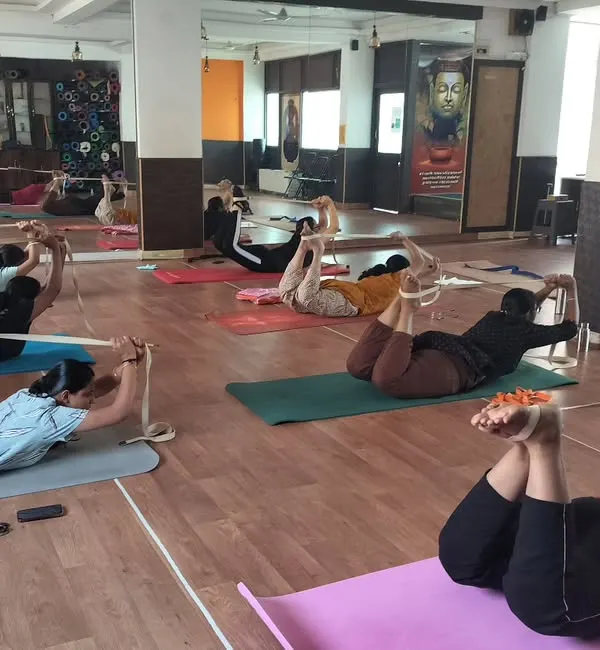
A yoga wheel can be used to add a challenge or provide support in complex poses. Here it assists in a deep, bound leg stretch, showing that props are for holding power, not just for beginners.
A yoga wheel supports a reclining leg extension, a pose that builds balance, strength, and surrender. It's a reminder that true strength is about control, patience, and channeling energy the right way.
The yoga wheel is a game-changer for posture. Here it's used in a supported Halasana (Plow Pose) against the wall to open the chest, lengthen the spine, and relieve tension.
Getting into the festive spirit with a supported Natarajasana (Dancer's Pose) using the yoga wheel. Props can bring a playful and joyful element to your practice while helping you explore deeper stretches.
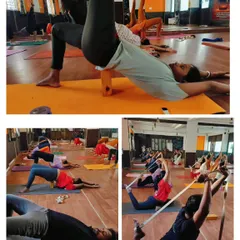
Flowing into the weekend with a balancing pose using the yoga wheel for support. This prop helps stabilize the knee, allowing for a deeper focus on alignment and breath.
A deep hamstring and hip stretch using the yoga wheel for support. This allows the body to relax into the pose, making it a great way to reset and recharge on a Friday.
About Yoga with Props: Support Your Practice
People often think yoga props are just for beginners, but in my 17 years of teaching, I’ve found them to be essential tools for precision. Whether you are using a block to ground your hand or a wheel to safely deepen a backbend, these aren't crutches. They are bridges that allow you to achieve correct alignment, protecting your spine and joints while letting you go deeper into the stretch.
Using props is how we achieve 'Sthira Sukham Asanam'—that state of steadiness and comfort. When you force a pose without proper support, your body tightens up to protect itself, which is the opposite of yoga.
Blocks and Straps: Bringing the Floor to You
If you cannot touch your toes, using a block does not mean you are failing; it means you are respecting your body's current range of motion. This prevents injury and builds better muscle memory. I incorporate these tools in my Hatha and Vinyasa classes to help you find length in the spine and stability in your foundation.
Yoga Wheels: Moving with Confidence
In my DLF Phase 4 studio, we use wheels as dynamic support. They are fantastic for opening the chest and improving thoracic mobility. We use them to assist with inversions and deep backbends like Urdhva Dhanurasana. It offers the support needed to move confidently rather than fearfully, allowing your nervous system to relax into the pose rather than bracing against it.
My Philosophy
Yoga is not a competition; it is a dialogue between your body and your breath. When you use props, you remove the physical limitation that often causes distraction, allowing you to focus on the pranayama and stillness. My classes are designed to make sure you have the right tools to build a practice that evolves with you, not against you. Whether we are in the studio or connecting online, the goal is always the same: to live your yoga, not just perform it.
Similar work from other experts
Browse through Curated picks from other experts on mytribe
Yoga with Props: Find Your Support and Alignment
Deepen Your Yoga Practice with Props
Yoga with Props: Deepen Your Practice Safely
 6
6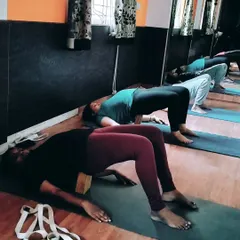
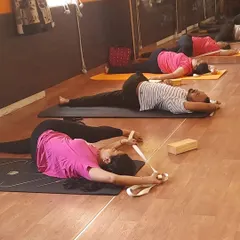
Yoga with Props: Deeper Stretches & Better Alignment
Supported Yoga Alignment with Props in Delhi
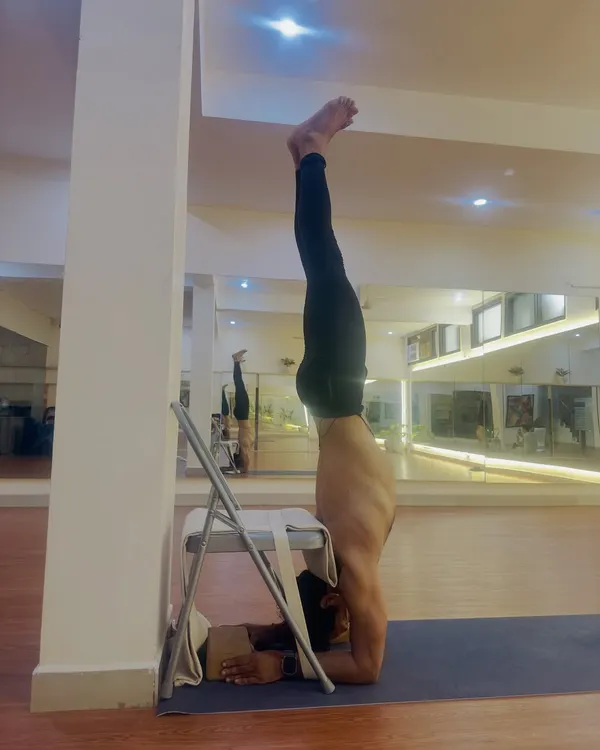 20
20Prop-Assisted Yoga Classes for Correct Alignment
More from Yoga Classes by Komal Sodhi
More services by Komal Sodhi