Practical Life Skills: How Children Build Independence
See how children at our Haralur school master everyday tasks. Through purposeful work like pouring, chopping, and sewing, they gain coordination, focus, and the confidence to do things for themselves.
This child is learning to sew a button, an activity that took him nearly 20 minutes of focused effort. This builds tremendous concentration, hand-eye coordination, and the determination to see a task through to completion.
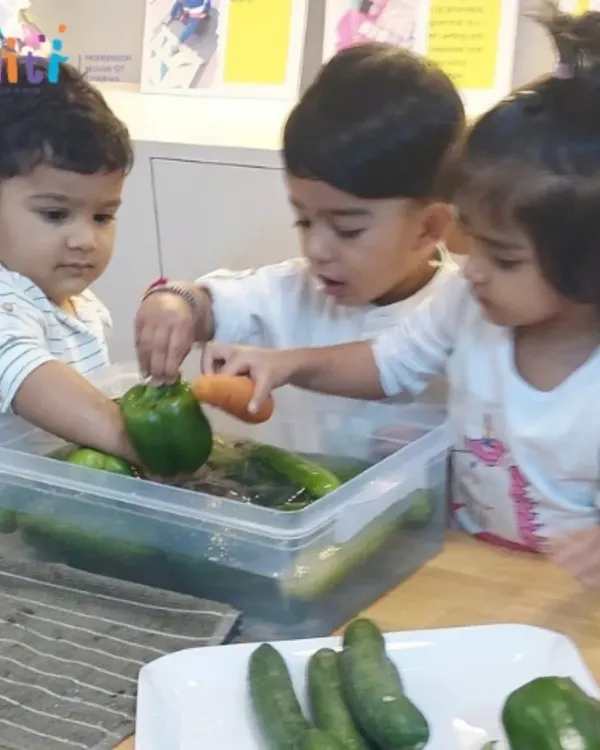
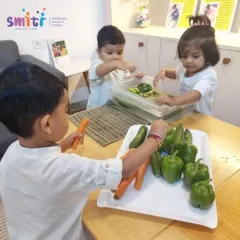
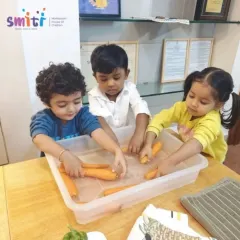
Practical life activities are purposeful. Here you can see children engaged in peeling a carrot, cutting vegetables, and using dressing frames, all of which are fundamental life skills that build coordination and independence.
"Show me how to do it and watch me excel." This child is carefully practicing chopping carrots. With safe tools and proper guidance, children learn real-world skills and gain immense confidence in their abilities.
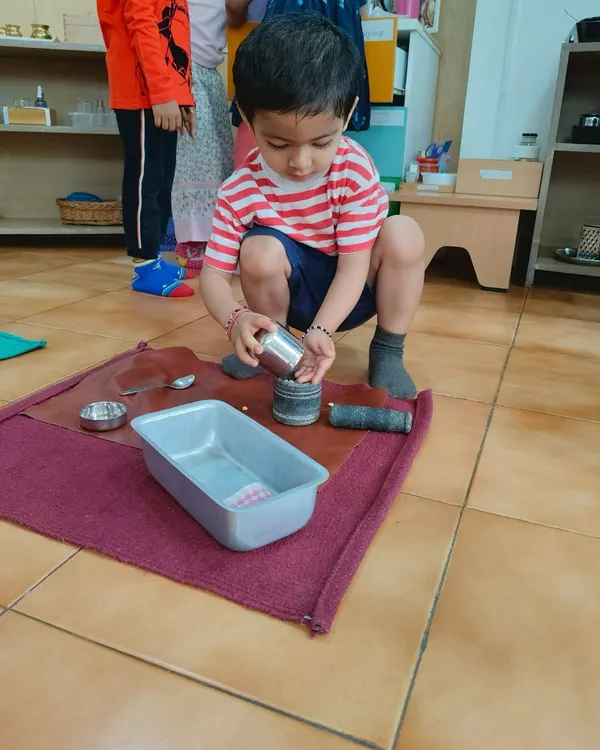
Look at the control this child has on his hand movements while pouring. He didn't get there in a day. It took him time and practice, or repetition as we like to call it, to achieve this level of mastery.
Repetition is the key to mastery in our practical life curriculum. Whether pouring water or grains, each attempt refines the child's movements and deepens their focus, leading to effortless control and coordination.
Pouring activities are a cornerstone of developing hand-eye coordination. Children work with different materials like water, grains, and sand, learning to control their movements with increasing precision.
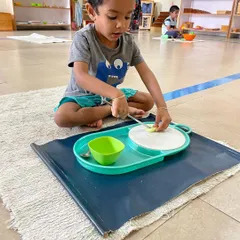
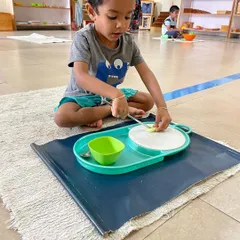
This young child is concentrating deeply on pouring rice from a pitcher into smaller glasses. This simple exercise is a powerful tool for improving hand-eye coordination and developing a steady hand.
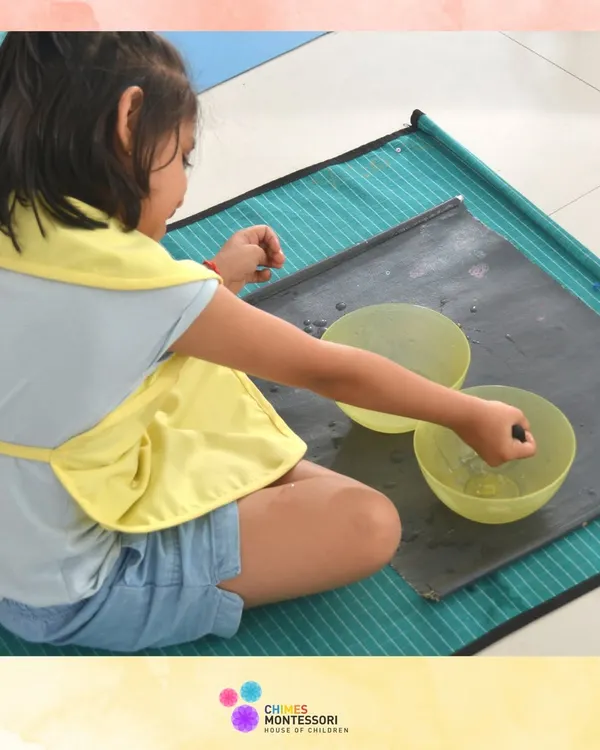
Exploration is how children learn best. This child is discovering the properties of water by pouring it, experiencing concepts like volume and flow firsthand. This is learning the Montessori way.
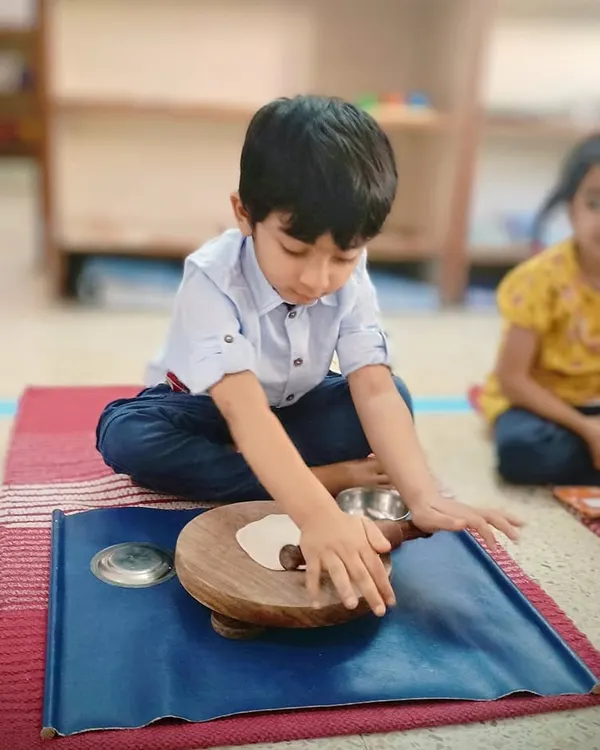
A child's ability to sit and concentrate is built through engaging, hands-on work. Here, a child is focused on rolling dough, an activity that strengthens their hands and their capacity for sustained attention.
Learning to button a shirt is a significant step towards independence. We use dressing frames to help children master these essential life skills at their own pace, building confidence with every button.
About Practical Life: Building Independence
You won't see plastic toys in our practical life area. Instead, you will see a child spending twenty minutes carefully buttoning a frame, rolling a floor mat, or grinding ragi on a traditional stone. This isn't just about finishing a task; it's about the deep concentration they build while they do it. When a child learns to pour their own water or zip their own jacket, they stop asking for help and start trusting their own hands.
In our Haralur classroom, we view daily chores as the most important work a child can do. Practical life activities serve as the foundation for everything else. By engaging in tasks like peeling vegetables, sewing buttons, and polishing surfaces, children are not just 'helping out'—they are refining their fine motor skills and developing a sense of order.
Why Practice Matters
Repetition is the engine of mastery. A child pouring water from a pitcher into a glass might spill a dozen times, but with each attempt, they adjust their grip, slow their movement, and refine their balance. This creates a physical bridge between the mind and the hand. We see this with our grinding stone activity; it requires physical strength, coordination, and the patience to follow a process from start to finish.
Connecting to Culture
We weave our local culture into these daily tasks. Using a traditional grinding stone to turn grains into flour is a practical life activity that connects children to history and community. It provides a tactile, sensory experience that modern electronic toys cannot replicate.
The Result: Confidence
The goal is not to have a perfectly chopped carrot or a perfectly sewn button. The goal is the child's realization that they can influence their environment. When a child masters these skills, they develop an internal sense of capability. They become independent thinkers who are prepared for more complex academic work because they have already learned how to focus, how to correct their own mistakes, and how to persevere.
Similar work from other experts
Browse through Curated picks from other experts on mytribe
Practical Life Skills: Montessori Learning by Doing
 22
22
Practical Life Skills: Building Independence in Children
Practical Life Skills: Montessori Learning in Action
 54
54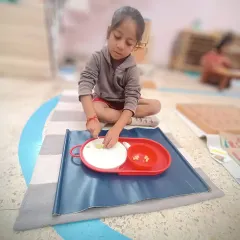
Practical Life Exercises for Early Childhood Independence
 37
37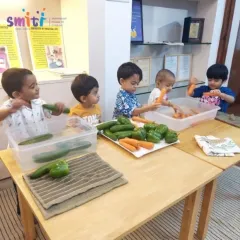
Building Independence Through Montessori Practical Life Skills
 17
17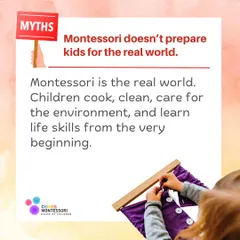
Building Capable Children Through Practical Montessori Skills
More from Montessori Preschool & Daycare by Ken Montessori
More services by Ken Montessori