Imaginative Role-Play Activities for Preschoolers in Yelahanka
We turn our classrooms into miniature worlds where children explore new professions, build social connections, and learn through immersive, hands-on play.
This is our miniature community, set up for a month-long exploration of homes and neighborhoods. It includes a school, hospital, and roads, providing a rich environment for imaginative play.
A view from the classroom into the "Home & Community" play area on our terrace. This setup seamlessly blends indoor and outdoor learning, giving children space to explore.
Two children play with wooden cars on the roads of our miniature town. This kind of play helps them understand concepts like traffic, directions, and community layouts.
Children interact with different parts of the community, including a vegetable shop and road signs. This detailed setup encourages complex narratives and social interactions.
One child pretends to be at school while another explores a box of farm animals. In our role-play area, multiple stories can happen at once, driven by the children's interests.
A wide view of the children fully engaged in playing with the miniature community. They are crawling, driving, and rearranging elements, taking full ownership of the space.
The children collaborate and negotiate as they play, deciding where the cars should go and what happens next in their town. This is social-emotional learning in action.
During circle time, we discuss the roles of different people in our community. Here, a child stands and shares her thoughts with the group, building public speaking confidence.
Our role-play zone is one of the most popular areas. Here, a child pretends to be a carpenter, using wooden tools to "fix" things, which helps develop fine motor skills and imaginative thinking.
Two children play doctor, using masks and a toy thermometer to care for a baby doll. This helps them process their own experiences with doctors in a safe, controlled way.
About Imaginative & Role-Play Worlds
You might see our students setting up a miniature town complete with road signs or pretending to run a salon with scissors and paper. These are not just toys scattered on the floor. Every prop acts as a tool for practicing real-life skills, from navigating traffic rules to understanding the patience required to be a carpenter. It provides a safe space for children to process their world before they step out into it.
Children do not just play pretend at our center. Role-play is a core part of our inquiry-based curriculum, grounded in the belief that children learn best by doing. When we set up a mock community, students are not just pushing cars. They are negotiating with peers about road safety, deciding where the school goes, and assigning roles like doctor or shopkeeper.
Why Role-Play Matters
This type of immersive play builds critical soft skills that traditional classroom settings often miss. When we run a salon day, for example, two-year-olds practice fine motor coordination using child-safe scissors, focusing intently on the task of cutting paper hair. These activities foster empathy, language development, and spatial awareness.
How We Create Worlds
We curate these environments based on the children's current interests. If they are talking about their families, we build a home. If they are curious about community helpers, we create a bank, a hospital, and a vegetable shop. The goal is to make abstract concepts like community and service concrete and understandable.
By stepping into different roles, children learn to solve problems and express themselves in a secure environment. They lead the narrative, and we act as facilitators to keep the curiosity flowing.
Similar work from other experts
Browse through Curated picks from other experts on mytribe
Role-Playing Activities That Build Real-World Skills
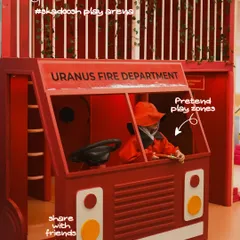
Imaginative Pretend Play Zones in Haralur
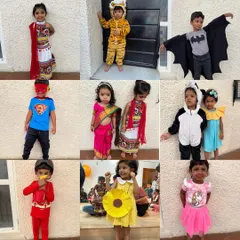
Life Skills and Community Fun for Toddlers
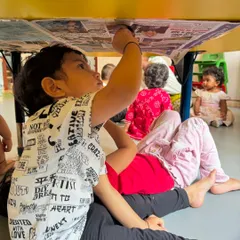
Learning Through Joyful Activities at Cubby Tales
Creative and Artistic Expression for Preschoolers
Hands-on Montessori Activities for Preschoolers
More from After-School Enrichment Programs by Knowledge Origin
More services by Knowledge Origin