Nritta: The Architectural Rhythm of Bharatanatyam
Nritta is the pure, rhythmic foundation of Bharatanatyam. It is where complex mathematical patterns meet physical endurance, transforming precise body geometry into kinetic energy.
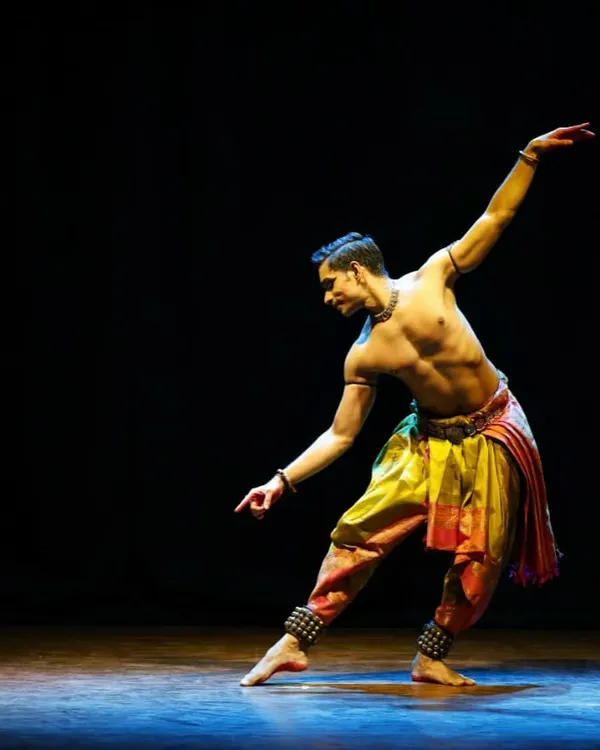
Performing a Reetigowla Ata tala varnam. This piece was a joy to explore, both as a musician and a dancer, focusing on the intricate rhythmic structures and the lyrical beauty of the composition.
A static yet powerful pose that demonstrates the core strength and stability required in Bharatanatyam. This foundational posture, known as Araimandi, is a key focus in my basic Adavu and body conditioning classes.
A high-energy Jathi sequence from a Varnam performance in London. Nritta is about precision and stamina, and this piece was a wonderful challenge in executing complex rhythmic compositions with clarity and fire.
A moment from a Varnam performance at the Music Academy. This piece required a deep understanding of the jathis composed by Nattuvanar Balakrishnan Sir, showcasing the pure dance aspect of the Bharatanatyam repertoire.
This dynamic Nritta pose, with the leg extended high, showcases the flexibility and control that we build through dedicated practice. My body conditioning modules focus on safely achieving this range of motion.
Performing a Jathi composed by Srihari Rangaswamy sir. This sequence is a test of rhythm, speed, and endurance. In my Nritta workshops, we break down such compositions to understand their structure and master their execution.
About Nritta: The Rhythm of Dance
Nritta is often mistaken for just rapid footwork, but it is actually a discipline of somatic geometry. In these performances and training sessions, we focus on the araimandi—that foundational half-sit—and the precise weight distribution required to execute complex jathis without straining your knees. If you find your stamina wavering or your rhythm lacking clarity during practice, that is exactly where we start.
Beyond the Steps
Nritta is the grammar of dance. While the story-telling aspect of Abhinaya pulls at the heartstrings, Nritta is what keeps the performance grounded. It is about the math of the Tala, the precision of the Nattuvanar’s composition, and the unwavering control of your core. Whether I am performing a Reetigowla Ata tala varnam or drilling basic adavus, the objective remains the same: total clarity in movement.
The Training Philosophy
My approach to teaching rhythm is built on the reality of the body. We do not just repeat sequences until they are memorized. We deconstruct them. We look at the body conditioning required to sustain high-energy sequences, like those I explore in my London and Bangalore workshops. If you are struggling with a specific jathi sequence or find your angashuddhi (purity of limb) slipping when you pick up the tempo, we break the movement down into its raw technical components.
Collaborative Precision
Pure dance cannot exist in a vacuum. It relies on a symbiosis between the dancer and the musicians. In my sessions, we often work with live mridangam and vocal accompaniment because rhythm is something you feel, not just something you count.
Common Focus Areas in My Sessions:
- Foundational Adavus: Ensuring the base is solid before adding speed.
- Somatic Awareness: Understanding how to use your floor-space and engage core muscles to prevent injury.
- Rhythmic Complexity: Deconstructing difficult jathis to understand the mathematical progression of the composition.
- Stamina Building: Training to maintain technical quality even when the tempo pushes your limits.
If you are a serious practitioner looking to audit your technique or refine your choreography, I provide one-on-one mentorship sessions specifically for this, where we review your form in detail.
Similar work from other experts
Browse through Curated picks from other experts on mytribe
Nritya & Karanas: Authentic Bharatanatyam Choreography
Technical Kathak Choreography (Nritta)
The Art of Bharatanatyam: Technique and Storytelling
 8
8
Bharatanatyam Performances and Professional Training
Bharatanatyam Foundations: Mastering the Basics
Bharatanatyam Classes: Traditional Margam Training
More from Bharatanatyam Workshops & Training by Divya Ravi
More services by Divya Ravi