Advanced Robotics & Electronics Classes for Kids (10+)
We move past the toys and into real-world tech. From Arduino programming to IoT, we teach students to build, debug, and understand the logic behind the machines.
I am building the future, one line of code and one circuit at a time. This video shows my students engaged in both coding and hands-on electronics, working with breadboards and components to bring their ideas to life.
A student demonstrates his understanding of parallel circuits. He explains that if one LED is removed, the others stay lit because the voltage is not divided. This is the kind of deep, practical knowledge I aim to instill.
Here, a student explains the fundamentals of a series circuit. He demonstrates that when one LED is removed, the entire circuit breaks and the other lights go out. This hands-on experiment makes electrical concepts tangible and easy to understand.
At the end of each session, I have students explain what they built. Here, a young learner identifies the components of his circuit, like the slide switch and jumper wires, reinforcing his knowledge and building his confidence.
My students presenting their innovative projects. This compilation shows a range of creations, from a LEGO dump truck and a science rover with a distance sensor to an obstacle-avoiding robot and a fan with a potentiometer.
Future innovators showcasing their work. This video features students explaining their creations, including an obstacle-avoiding robot using an IR sensor and an Arduino, and a fan model controlled by a potentiometer.
To get into robotics, you have to get your hands dirty. I guide my students to pick up an Arduino development board and start interfacing circuits, sensors, and actuators using the Arduino IDE. This is where the real learning begins.
A student works on a project to convert kinetic energy from footsteps into electricity. This video shows her focused on the complex wiring and soldering, a great example of our commitment to supporting women in STEM.
A 10-year-old student, Mann Parikh, created this automated plant watering system. Using a soil moisture sensor and a pump, his invention ensures plants get the perfect amount of water, showcasing incredible creativity and problem-solving skills.
This is Gen Z learning in action. Students are deeply engaged with their laptops and Arduino boards, coding and testing their electronics projects under the guidance of an instructor. This is the hands-on experience that builds real skills.
About Advanced Robotics & Electronics (Ages 10+)
Most classes teach kids to copy code. Here, we give them a breadboard, a sensor, and a circuit, then ask them to make it function. When an obstacle-avoiding robot hits a wall, the student doesn't get a hint. They look at their C++ code, check their IR sensor wiring, and solve the logic error themselves. That is how they learn to think.
For students aged 10 and up, the focus shifts from visual blocks to C++ and hardware integration. We believe that technology is not something to be consumed, but something to be built.
The Engineering Approach
We don't offer shortcuts. Students work directly with Arduino development boards, breadboards, and a variety of sensors including LDRs, ultrasonic distance sensors, and IR receivers.
Our curriculum pushes them to:
- Master circuit design by understanding Ohm's Law and series/parallel configurations.
- Write and debug text-based code rather than relying on drag-and-drop interfaces.
- Understand how hardware and software communicate to solve problems.
Real Projects
Students don't just complete worksheets; they build functional prototypes. We guide them through creating solar-powered street lights, autonomous cars that navigate obstacles, and home automation systems.
If a project fails, we don't fix it for them. We ask, 'What is the voltage?' or 'Is your variable defined correctly?' and let them find the solution. This process builds the mental fortitude and problem-solving muscle they need for the future.
Whether they are building a drowsiness detector or learning the basics of IoT (Internet of Things), the goal remains the same: equip them with the skills to turn an idea into a working machine.
Similar work from other experts
Browse through Curated picks from other experts on mytribe
Advanced Robotics & AI Classes for Teens
Advanced Robotics and Coding Programs for Kids
 22
22
Robotics and Coding Camp Programs for Kids
Student Showcase: Robotic Cars & Vehicles
Hands-On Robotics Workshops & STEM Camps for Kids
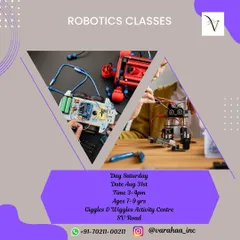
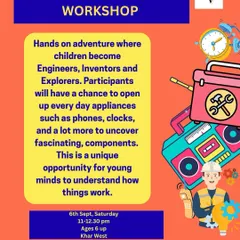
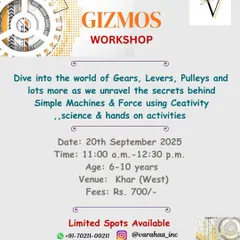
Robotics & Engineering Workshops for Kids in Mumbai
More from STEM Education Programs by STEM Art Lab
More services by STEM Art Lab